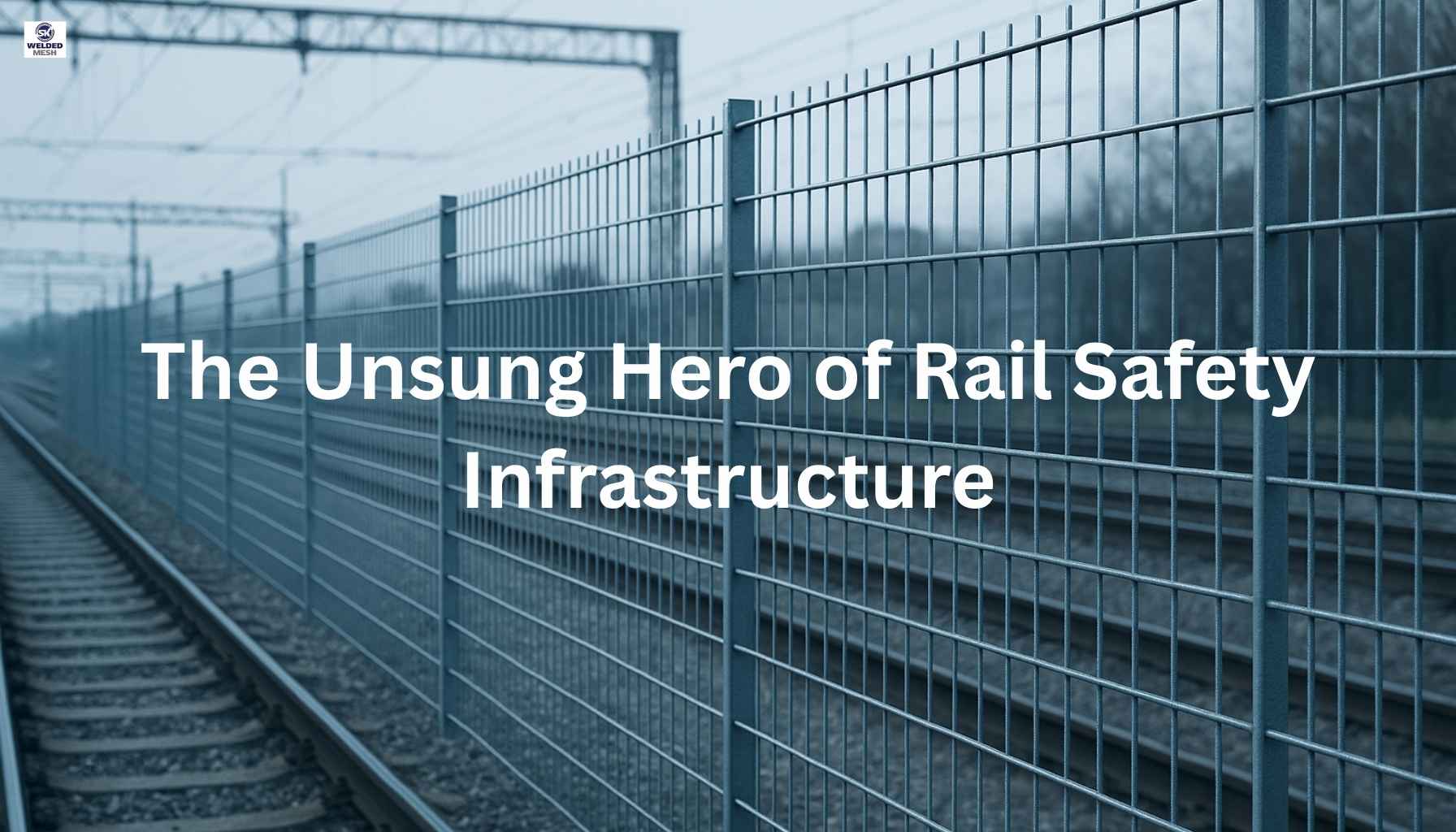
From urban corridors to rural crossings, every rail project carries hidden risks trespassing, debris, sudden access. Most passengers never think about what keeps them safe on the other side of the platform. But those who build railways know better. Safety does not start with signals. It starts at the edge. And that’s where fencing becomes the quiet backbone of modern rail safety infrastructure.
Let’s understand how it actually works across the system.
No zone attracts risk like the tracks. Stray pedestrians, livestock crossings, construction material, all of these find their way into unguarded rail zones.
A clear barrier makes a difference.
High-strength mesh fencing secures these perimeters without blocking visibility. Unlike walls or hoardings, it allows cameras, patrol teams, and sensors to do their job. Survey teams often use mesh zones to run drone sweeps or visual spot checks.
Many railway teams now prefer anti-climb mesh with tight apertures. It prevents scaling attempts while still offering full visibility. That combination makes it easy to monitor and even easier to maintain.
Electrified tracks and substations come with their own safety demands. You’re not just keeping people out; you’re protecting them from high-voltage zones.
GI mesh fencing handles this well. Its zinc coating resists corrosion, even near overhead traction equipment or high-heat areas. It also holds its structure under wind loads, especially around open fields or elevated yards. For certain railway boundary applications, knotted wire mesh for railway boundary can also be considered for creating durable and secure perimeter protection. A reliable railway knotted fencing manufacturer can provide suitable fencing configurations based on trackside conditions and project requirements.
Teams working on elevated metros or semi-underground substations often pre-fabricate mesh panels with bolt-on mounts. This reduces on-site welding and speeds up zone isolation.
Crowd control doesn’t always mean height; it means flow. Inside and around stations, mesh finds its role in guiding, zoning, and protecting.
Lower-height mesh fencing manages queues near entry gates and ticket counters. In areas near elevators or escalators, modular mesh barriers help redirect foot traffic during maintenance or emergencies.
We’ve supported metro authorities who needed panels pre-labeled by station code and layout grid. That small step made deployment quick across multiple zones without confusion.
During track expansion or upgrade projects, temporary work zones need solid separation from live rails. Contractors use GI mesh fencing for these setups, especially when schedules move fast. A reliable railway boundary fencing manufacturer India can provide suitable mesh fencing solutions for different railway project requirements.
Unlike brick walls or concrete dividers, mesh panels can be stacked, shifted, and reused. Some firms also request mesh with quick-lock mechanisms or built-in reflectors for visibility during night work. Working with an experienced railway track fencing supplier can also help contractors source practical fencing systems for temporary and changing work zones.
In one dual-track conversion project, reusable mesh fencing kept pace with the shifting work zones, without requiring major teardown or rebuild at each stage.
Rail safety comes from planning, not patches. And durable, well-laid mesh fencing has become part of that planning.
Our work in this space supports contractors, public agencies, and transit design consultants who care about the same outcome, which is safer corridors that stay on schedule. We supply GI mesh built to spec, bundled by zone, and delivered with performance already built in.
If your next project involves fast rail or smarter transit, we’d be glad to help you make safety a part of the design. Get in touch with us today.
It is pleasure working with well informed team of S.K.Weldedmesh Pvt. Ltd.,their expertise has brought results to our projects. They understand the customer’s requirements and priorities. A quality product is always appreciated in our field of work.
For years now we have trusted SK Welded products for a range of construction projects I have worked on. A good Mesh Manufacturing company in West Bengal that doesn’t just talk about quality but actually delivers it. Plus, their pricing is equally appropriate, which makes working with them an obvious and preferred choice.


