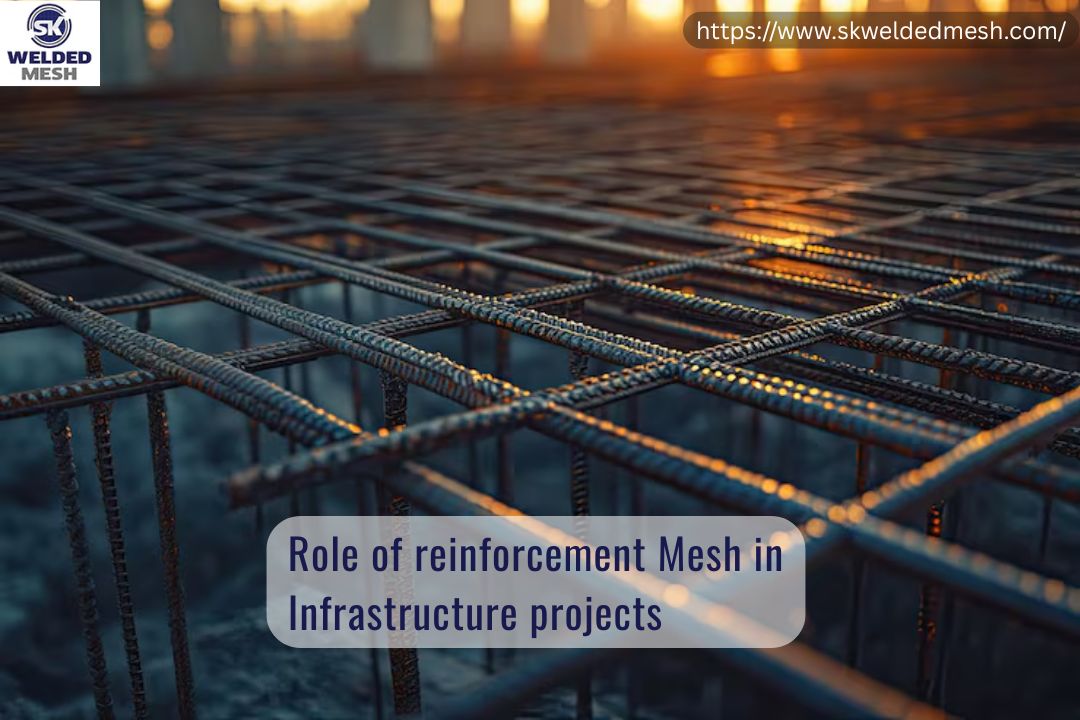
In 2026, it is easy to see how American infrastructure is evolving very fast. In such a scenario you can see growing use of reinforcement mesh in a wide range of infrastructure projects across the US. It is not hard to understand the reasons for this. Contractors are increasingly trying to ensure greater stability, security and durability of the projects that they undertake. And they are using the best materials to make sure of this. Here is a handy 2026 guide to some of the top applications of reinforcement mesh in US infrastructure projects.
Large expanses of concrete have always been prone to cracking under:
When reinforcement mesh is integrated into the concrete matrix, it helps in more even distribution of stress. This reduces crack formation related to shrinkage and improves load bearing capacity. Several state transportation department authorities have reported the need for fewer maintenance issues over time after reinforcing concrete pavement. It helps to improve road performance and reduce lifecycle expenses.
These structures can have more tensile strength due to the use of reinforcement mesh. If there are micro-cracking problems, there can be corrosion of embedded steel elements. This can also be avoided. In coastal areas, specialized corrosion-resistant meshes can minimize degradation that generally occur due to salt exposure. Reinforcement helps in extending the service life of all these critical structures.
Reinforcement mesh in shotcrete linings supports excavation faces. It helps to stabilize tunnel walls, during as well as after construction.
In regions with higher seismic activities, engineered mesh systems help structures to absorb and redistribute forces with no major failure. There is an added layer of resilience due to this reason. Tunnel linings and underground passage construction can be much safer in this way.
Slabs and platform edges can deteriorate due to heavy rail traffic and constant vibrations. Due to the integration of reinforcement mesh, deflection and cracking issues can be reduced. It can make rides smoother and lower repair expenses. As expected, there are fewer service disruptions and an assurance of more reliability. It can also be useful in avoiding major risks down the line and protecting the lives of passengers.
Runways and taxiways are subjected to intense loading from aircraft landings and takeoffs. Due to the use of reinforcement mesh and high-performance concrete, there is better stress management across expansive surfaces. It prevents early distress and makes surfaces smoother for aircraft operations. At a time when airport modernization projects are extending across the U.S, reinforcement mesh is being regarded as even more crucial. It makes critical pavement segments stay strong despite heavy usage.
As you can see, reinforcement mesh has become integral to many infrastructure projects in the U.S. It is supporting sustainable designs, extending service life and improving structural performance, making construction projects capable of lasting much longer.
It is pleasure working with well informed team of S.K.Weldedmesh Pvt. Ltd.,their expertise has brought results to our projects. They understand the customer’s requirements and priorities. A quality product is always appreciated in our field of work.
For years now we have trusted SK Welded products for a range of construction projects I have worked on. A good Mesh Manufacturing company in West Bengal that doesn’t just talk about quality but actually delivers it. Plus, their pricing is equally appropriate, which makes working with them an obvious and preferred choice.


