New railway zones across India are moving fast. High-speed trains, automated switches, digital signaling, they’re all coming together to create a connected rail ecosystem. But with so much focus on speed and efficiency, one key detail often gets pushed to the side: fencing. Not just to close gaps, but to keep people, equipment, and systems safe while the network grows more complex. And while older lines worked with simple walls or loose boundaries, smart rail corridors need something more deliberate.
Let’s break down why that shift matters.
Trains only run safely when nothing crosses their path.
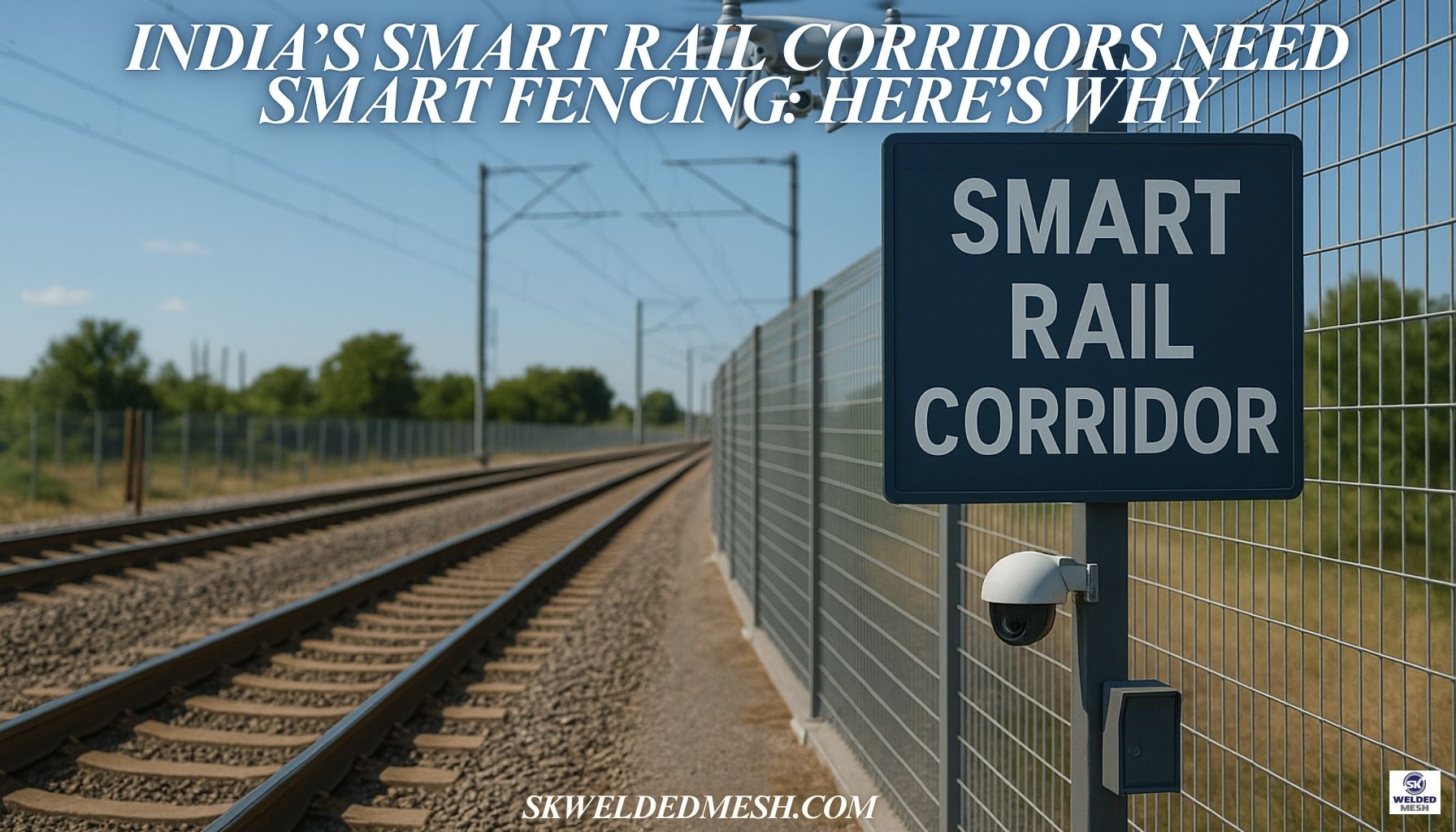
In many rural and semi-urban stretches, livestock and pedestrian crossings are still common. Even small intrusions can trigger big consequences. This is where fencing plays a front-line role.
3D welded mesh has become the preferred solution in most new projects. It’s strong, quick to install, and easy to monitor.
When spaced and tensioned correctly, it holds its form and prevents sagging, even under weather stress.
We’ve supported clients placing this along stretches with tight train schedules, and the consistency in performance has helped avoid repeated adjustments.
Every corridor now includes substations, control rooms, and signal relay zones.
These aren’t just passive buildings; they carry live systems, automation hardware, and energy flow that powers entire sectors of the route.
Fencing here has a different job. It needs to resist climbing, stay grounded, and keep visual access open for cameras.
Welded mesh suits this mix well. It’s difficult to breach, simple to repair, and allows for airflow around sensitive gear.
On several recent installations, mesh panels were paired with ground clamps to manage electrical safety without blocking visibility.
A modern station brings together more than just foot traffic. There are ticket counters, digital entry systems, platform screens, vendors, and staff-only areas – all moving at their own pace.
Fencing plays a quiet but critical role in organizing these zones. Welded mesh, when sized and positioned correctly, guides queues without feeling restrictive. Anti-trespass fencing railway systems can also help define restricted areas and improve separation around sensitive railway zones.
Around escalators, entry gates, and waiting areas, it gives shape to the flow rather than creating barriers.
In crowded terminals, this zoning helps avoid accidental cross-traffic or bottlenecks. A reliable railway fence panels supplier can provide suitable panel configurations for different station layouts and operational requirements.
We’ve worked with transit teams where these layouts reduced wait times and simplified foot movement during peak hours.
Every smart corridor includes inspection and maintenance stops. Fencing cannot interfere with that. At the same time, open areas without control create risk. The answer is selective flexibility.
Mesh fencing designed with quick-release panels or keyed access gates solves this. You get security where needed and movement where planned.
Our team has worked on supply packages where mesh was bundled by zone and labeled for ease, cutting down on delays during inspections or emergency shutdowns.
We’ve also supported setups with integrated signage and color-coded markers to speed up access in low-visibility conditions. These small planning decisions reduce confusion when every minute counts.
Smart rail systems call for smart fencing decisions. The days of one-size-fits-all concrete boundaries are past.
Now, what matters is how the fence performs, responds, and fits within the pace of the build.
We’ve worked with public contractors, engineering firms, and private rail developers to supply mesh that stands up to these demands without slowing down project flow.
If your corridor build is headed in the same direction, we’d be glad to support it with fencing that holds up to more than just design drawings.
Get in touch with us today and let’s talk.
It is pleasure working with well informed team of S.K.Weldedmesh Pvt. Ltd.,their expertise has brought results to our projects. They understand the customer’s requirements and priorities. A quality product is always appreciated in our field of work.
For years now we have trusted SK Welded products for a range of construction projects I have worked on. A good Mesh Manufacturing company in West Bengal that doesn’t just talk about quality but actually delivers it. Plus, their pricing is equally appropriate, which makes working with them an obvious and preferred choice.


