Some safety features only show their true value when the lights go dim. That’s when most project zones become harder to monitor, and risks tend to climb. Rail corridors, substations, and storage yards often face this issue (especially at night, during lean shifts, or delayed surveillance).
Modern fencing already solves installation speed and structural strength. But visibility after dark is still one of the weak links. That’s where a new coating technology comes in—one that helps your fence stand out exactly when your team can’t.
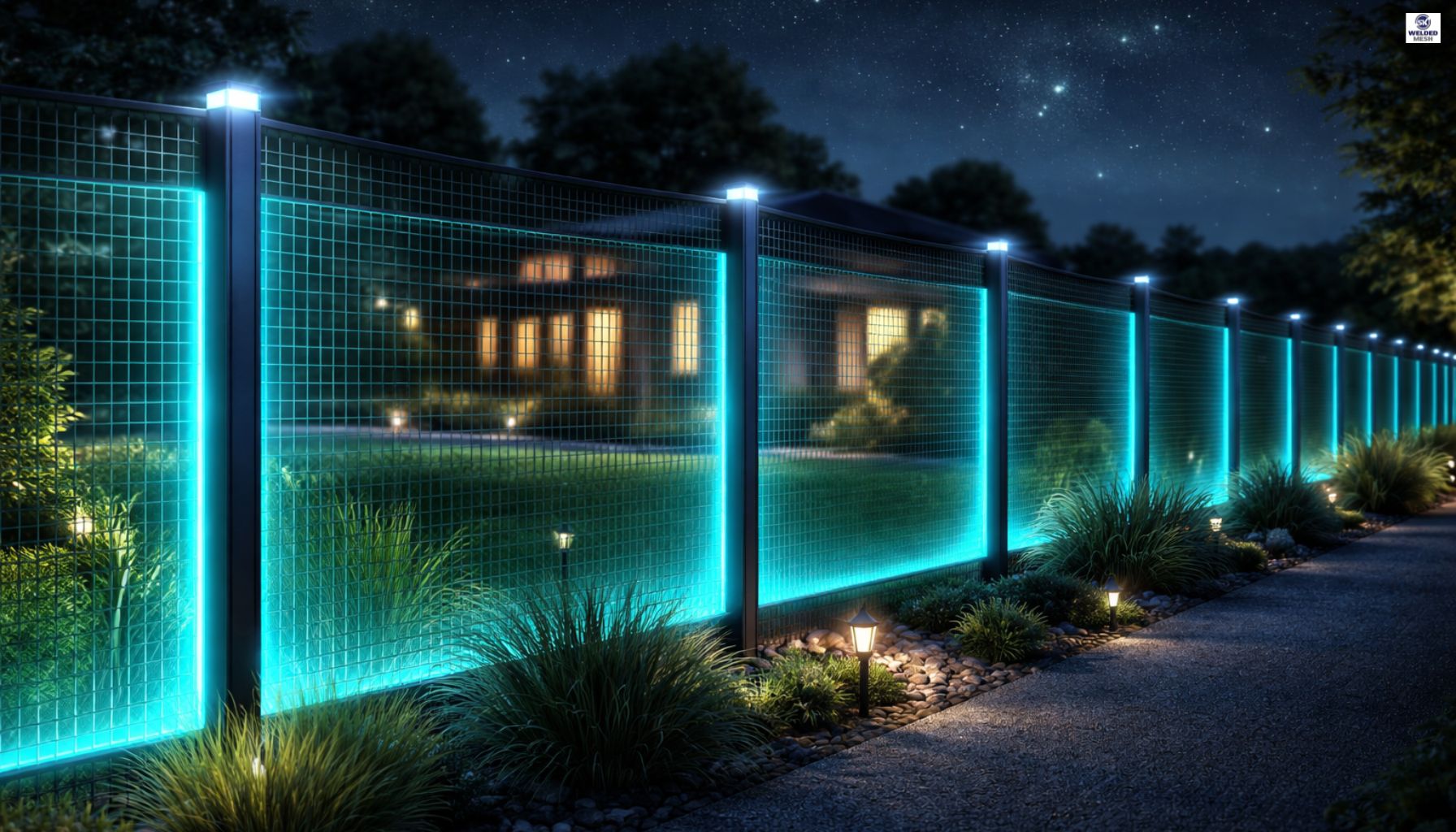
Night illusion coating is a special surface finish that makes fencing more visible after dark. Think of it like a safety vest for your fence. It uses a retroreflective layer, a finish that reflects light back toward its source when it hits the surface.
This means the mesh appears standard during the day. But at night, when a headlight or flashlight passes over it, the fence flashes into view. That creates strong contrast outlines without changing how the mesh is built or installed.
It still looks and stacks like regular weldedmesh. But it performs differently when it matters most, which is during low-light movement, patrols, or late-night work.
Most site breaches don’t come from complex attacks. They happen because a fence looked silent or inactive. The darker it appears, the more inviting it becomes for someone trying to cut through or sneak past.
Night illusion coating flips that impression. As soon as light moves across the coated mesh, the fence becomes sharply visible. It does not rely on CCTV, alarms, or human presence. Just motion or light, which is enough to create a pause.
For security teams, even that pause can help. It gives time for someone to take notice or for systems to register movement before anything escalates.
Contractors who work in zones where speed matters say this helps in a simple but powerful way. It creates passive control without adding extra equipment or overhead.
One of the strongest reasons contractors are adding this coating is that it fits right into the system they already use. No special mesh type, no separate foundations and no site disruption.
The coating goes on just like a regular powder finish. Your mesh still arrives packed by zone, tagged per drawing, and ready to install. Nothing changes in your handling or team workflow. The only thing that’s different is how the fence reacts after dusk.
Even inspection teams have found it useful. During night checks or low-light walkthroughs, the coating provides visual clarity that helps teams confirm alignments or assess boundaries faster.
This coating has been used in projects where speed and security often overlap. For example:
In each of these, the coating has helped create a more alert-looking boundary—without needing manpower to maintain it.
Modern fencing supports more than just perimeter control. It plays a role in how smoothly projects operate by improving visibility, reducing uncertainty, and helping teams make faster decisions on site.
Night illusion coating answers a growing need in high-movement zones. It works without sensors or software. No need for battery-powered systems or signal relays. The mesh stays familiar, and the coating adds an extra layer of visibility exactly when it’s harder to see clearly.
This kind of upgrade fits well into how rail, power, and civil infra are evolving, where safety and speed need to run together, even during lean shifts or delayed patrols. You work with the same panels, but they now support more informed movement across the site.
Night illusion coating fills a gap that’s often ignored: visibility after hours. It turns regular fencing into a boundary your team can rely on when fewer eyes are on site.
We’ve worked with contractors rolling out coated mesh in high-risk zones across rail, power, and civic builds. The result has been consistent: better clarity, faster reactions, and fewer edge-case misses during patrol or audit.
If your next project runs late shifts or spans multiple security levels, this might be one of the easiest changes to add with the highest value return.
It is pleasure working with well informed team of S.K.Weldedmesh Pvt. Ltd.,their expertise has brought results to our projects. They understand the customer’s requirements and priorities. A quality product is always appreciated in our field of work.
For years now we have trusted SK Welded products for a range of construction projects I have worked on. A good Mesh Manufacturing company in West Bengal that doesn’t just talk about quality but actually delivers it. Plus, their pricing is equally appropriate, which makes working with them an obvious and preferred choice.